Here be Dragons

Western dragon with four legs and wings breathing fire

Dragons come in many shapes and sizes. Depictions of them range from the Western ones which are typically four legged with wings, through the two legged wyverns to the legless Asian varieties.

Western Dragons

In the West dragons in culture are normally creatures that cause death and destruction and are to be feared, and the term “Here be Dragons” was sometimes added to early maps to indicate that this were places where dangers were thought to lurk. This interpretation isn’t always the always the case though – we’re thinking of the Ice Dragon from Noggin the Nog, visit the Dragon’s Friendly Society if you’d like to visit, or revisit, this classic animation. They are also represented as defenders of important places and treasure. Joseph Campbell is famous for his concept of the monomyth, that influenced the story of Star Wars. He said, of the protagonist in a “Hero’s Journey”, that

“[f]or those who have not refused the call [to adventure], the first encounter of the hero journey is with a protective figure (often a little old crone or old man) who provides the adventurer with amulets against the dragon forces he is about to pass”.

He also said, later in the journey, in the

“Belly of the Whale”, that “[t]hat is why the approaches and entrances to temples are flanked and defended by colossal gargoyles: dragons …”.

Others say that Western dragons are just going about their own business and generally get a bad press.

Asian Dragons

Asian dragons are however typically associated with the rain, and with good fortune. A Chinese legend says that a horse-dragon, the lung ma, was the inspiration for not only the invention of Chinese writing, but also the I Ching. It says that Fu Hsi was crossed a ring when he saw the horse-dragon with a selection of dots on its face, back and side. He was so inspired by this that when he got home he drew a picture of the horse-dragon complete with the dots, and it was this picture that was used as the basis for both Chinese writing and the I Ching.

Dragons or Dinosaurs

While the origin in the belief in dragons is not known, it has been argued that some of the inspirations for them came from ancient people finding the bones of large dinosaurs. It isn’t hard to imagine ancient people coming across large bones that belonged to no creature that they were familiar with and believing them to belong to large fierce creatures, and being correct!

Learn More

Learn more about: Archaeology

(by Learn for Pleasure on 23rd April 2020)


Earth Day 2020 – Earth Day is 50

(by Learn for Pleasure on 22th April 2020)

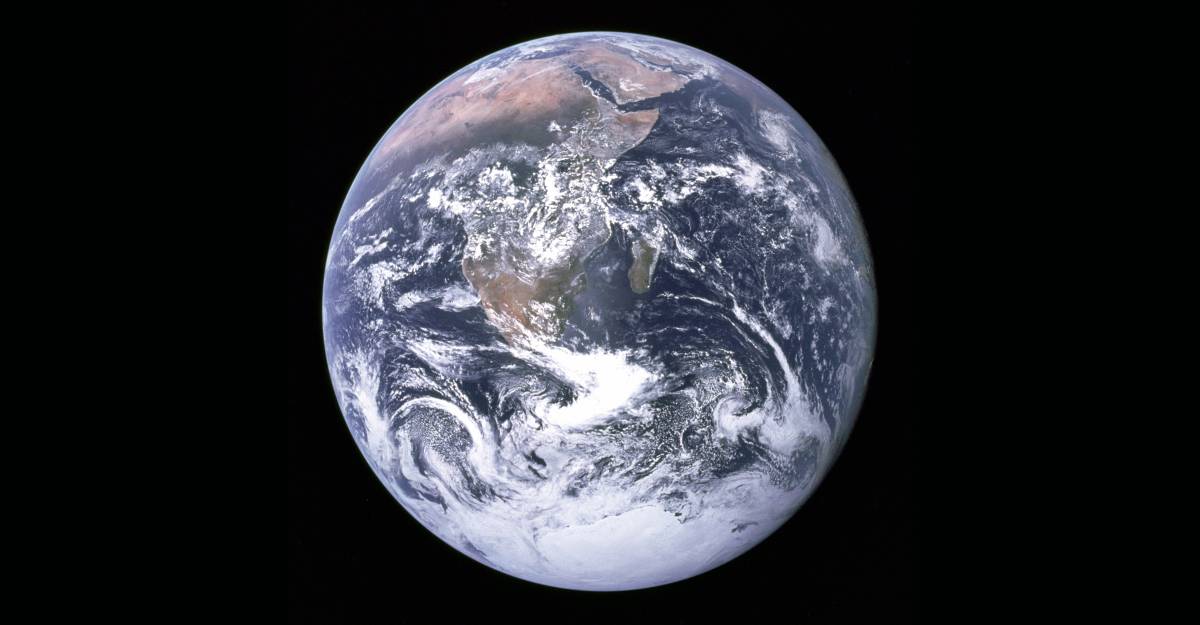
planet earth from space, the blue marble

Earth Day – this image of our planet Earth from space is the original Blue Marble photograph. This iconic photograph was taken by the crew of Apollo 17 on 7th December 1972. To them it had the size and appearance of a glass marble, which prompted the name. Apollo 17 was the last lunar mission with a crew so there have been no human take images of the whole earth since that time. NASA have released a number of blue marble images since then, but they have been taken from un-crewed vehicles, such as satellites. The Blue Marble 2012 image is a composite image taken in this way. The Blue Marble is used as the basis of the unofficial image of Earth Day flag.

Earth Day is 50 Years Old

The first Earth Day was celebrated in 1970 and took place primarily in the United States by 20 million people which was 10% of the population. It is now celebrated in 192 countries by more than a billion people. It is co-ordinated by the Earth Day Network whose stated mission is “To build the world’s largest environmental movement to drive transformative change for people and planet” and to “diversify, educate and activate the environmental movement worldwide”.

The Earth Day 2020 theme is “Climate Action”.

“Every year the Earth Day Network, as organizers of the original Earth Day, selects an environmental priority to engage the global public.

The enormous challenges – but also the vast opportunities – of acting on climate change have distinguished the issue as the most pressing topic for the 50th anniversary year. At the end of 2020, nations will be expected to increase their national commitments to the 2015 Paris Agreement on climate change, so the time is now for citizens to call for greater global ambition to tackle our climate crisis.

Climate change represents the biggest challenge to the future of humanity and the life-support systems that make our world habitable. Unless every country in the world steps up – and steps up with urgency and ambition – we are consigning current and future generations to a dangerous future.

Earth Day 2020 will be far more than a day. It must be a historic moment when citizens of the world rise up in a united call for the creativity, innovation, ambition, and bravery that we need to meet our climate crisis and seize the enormous opportunities of a zero-carbon future” – Earth Day Network.

We can all play our part in tackling climate change. As the “think globally, act locally” philosophy informs us – every small positive change that we make makes a difference for the environment as a whole. We are all interconnected and we all can make a difference.

Take a look at our environmental studies courses to see where your next green step might take you:


Discover Sailing Ships and Steamships

(by Helen Doe on 22th April 2020)

sailing ship in full sail

Have you ever wondered about the small ports around the coast and what they looked like 150 years ago? Or seen a graceful tall ship and thought about its history? Perhaps you have seen the Cutty Sark or the ss Great Britain and wanted to know more. Or your ancestry search has uncovered some seafaring relatives. With these two courses you can take a virtual trip back in time to the nineteenth century when the ports and harbours around Britain were full of sailing ships and steamships. They travelled the world carrying goods and people and by the end of the century the vast majority of world trade was carried in British ships. It was a big industry with large numbers of men and women involved on land and at sea. Even the smallest of ports had people and ships that travelled across the oceans.

The Lost World of the Sailing Ships course looks at the wooden ships, built locally, manned and owned locally in small ports. Today’s tourist coastal towns and villages looked and sounded very different then and the course transports you to visit some of them. You can read about the tough lives of the masters and the mariners, understand the range of goods they carried and the dangers they met. Sailmakers, blacksmiths, ropemakers and blockmakers were just few of the additional occupations supporting the industry. The investors in these ships were usually local tradesmen and women who understood the complex maritime world. Indeed, there were many women involved in both owning and managing the business of ships and we meet some of them.

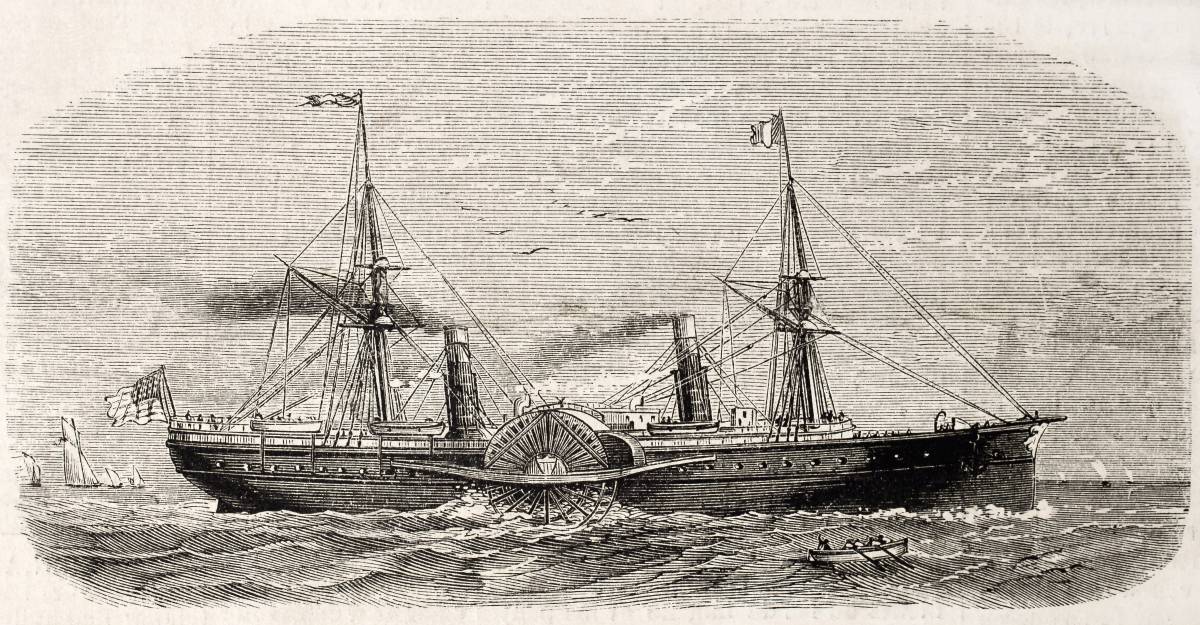
steamship drawing


The nineteenth century was, of course, the great industrial era and the Steaming Ahead course looks at the great experiments in maritime steam with the first steamships to successfully steam all the way across the Atlantic. The course takes you through these first trials to the end of the period when the great liners ruled the waves and the shipping companies became the household brands we know today. Using iron rather than timber meant ships could grow in size and cargo capacity. This was a time of innovative engineers and shipbuilders like Brunel, Napier, Scott Russell, Elder and Lairds. The industry offered new job opportunities for men and women and steamships transformed world communications, first with their speed and then by laying underwater cables. Mass migration was made possible, but sailing ships did not totally disappear. They were transformed and grew larger being built of iron and then steel. All of this was powered by people of the Victorian age who pioneered new ways of crossing the oceans.

Discover the lost worlds of sailing ships and steamships:


Free eBooks, Art, Literature and the Best Boat Books and Sailing Novels to Read in Self-Isolation

Armchair Explorations #3

(by Learn for Pleasure on 19th April 2020)

Sailing Ship

Here at Learn for Pleasure we’re thinking about all things nautical. For example, did you know that nautical twilight is one of three commonly accepted forms of twilight? They are civil twilight which is the brightest, nautical twilight which is when sailors can take reliable sightings of stars, and astronomical twilight which is the darkest and followed by night. In some locations at some times of year, for example at Learn for Pleasure head office in Exeter, Devon, UK, from late May to early July, it doesn’t get to true night, only as far as astronomical twilight.

While we’d love to be down by the sea right now we are, like a majority of people, self isolating. That does’t stop us from thinking about art, literature, the sea and sailing though. In the next county along from us, Cornwall, is one of our favourite sea side destinations, St. Ives. St. Ives is renowned for the quality of its light, and there was an artists’ colony founded there in the early 20th century which gave rise to the group of artists known as the “St. Ives School”, which includes Alfred Wallis and Dame Barbara Hepworth, and St. Ives hosts the “Barbara Hepworth Museum”. You can check out some of the webcams of St. Ives . Our favourite is the view of the harbour and Porthmeor beach which at the time of writing has a little boat in the centre of the shot with the slogan “Wish you were here” written on its side. While we do wish we could be there, that will have to wait for a while. In the mean time we’ve been thinking about art, literature and sailing.

The folks at Boating International have put together a list of the “Best Boat Books and Sailing Novels to Read in Self-Isolation”, so we can visit via our imagination. Some of them we’ve read, like “The Voyage of the Beagle” by Charles Darwin, and many of them are available as free eBooks in various formats, including Kindle and EPUB, from Project Gutenberg and you can download a copy of “The Voyage of the Beagle” – Charles Darwin from there.

Some other classics from the list that are available to download are:

You can view the full list of the “Best Boat Books and Sailing Novels to Read in Self-Isolation” and after you’ve picked out a book or two, why not check out some of our related courses:

Virtual Tour 02 – Tomb of Queen Meresankh III

Armchair Explorations #2

(by Learn for Pleasure on 18th April 2020)

sphinx at giza

The Giza Project at Harvard University have created a virtual tour of the tomb of Queen Meresankh III.

The Giza Project provides access to a wealth of information about sites, including the Pyramids, on the Giza Plateau in Egypt, including, media and research materials. As part of this project they created the virtual tour Queen Meresankh III’s tomb.

Queen Meresankh III was the daughter of Prince Kawab and Heterpheres II of the Fourth Dynasty in ancient Egypt. Her name is usually understood to mean “she love’s life”. She was married to pharaoh Khafra, and had at least five children – one daughter, Shepsetkau, and four sons, Duaenre, Khenterka, Niuserre and Nebemakhet. She held the royal title of “King’s Wife, Great of Scepter”.

She lived and died in the 26th Century BCE and is believed to have been around 50 when she died. Her tomb is a flat roofed mastaba tomb at Giza and was originally built for her mother. The colours within the tomb are well preserved and it is noted for the high quality of its bas-reliefs and includes ten statues of royal women at the north wall. Take the virtual tour Queen Meresankh III’s tomb and see it’s striking interior for yourself.

Ever wondered what hieroglyphs say? If so, take a look at our Ancient Egyptian Hieroglyphs for Beginners course with Hieroglyphs expert Dr Bill Manley.