
Tracey has written fiction for as long as she can remember, covering a variety of genres and subjects. Her first stage play WITCH, a historical drama based on original English witch trial transcripts, premiered in 2016 and has been performed continuously ever since. It has been used as Theatre In Education for Years 8 and 9 and for Exeter University undergrads and has been included as a formal seminar in two Bristol University undergrad degree courses – ‘Witchcraft’ and ‘History Outside the Box’. Its 75th performance was also its London premiere.
Tracey’s most recent publications were ‘Dark Folklore’ (2021) , co-written with her husband Mark, and ‘Who Is Anna Stenberg?’ (2023) , her first full-length novel. She has several other titles currently in progress, one of which is a non-fiction expanding on the research she undertook to write WITCH. She has written regular folklore columns for the Dartmoor newspaper The Moorlander, and is an active member of the Exeter Authors Association, a network providing support to writers and promoting a love of books and reading.
When she is not writing, Tracey can be found behind a microphone, as one of the voices behind Devon-based indie audio production house and theatre company Circle of Spears Productions. She is a freelance narrator on Audible and has a sizeable list of stage, TV and film credits. She gives talks to a variety of groups on historical subjects such as witchcraft and early modern medicine. She doesn’t relax often, but when she does, it generally involves reading, coffee and her slightly unhealthy obsession with sock yarn. She, Mark and their daughter live near the edge of a forest in mid Devon with a feline trip hazard.
Tracey teaches:

Mark Norman is an independent folklore researcher and author. He is an elected council member of The Folklore Society , the UK’s oldest academic society for the study of folklore and its associated disciplines.
Mark is also the creator and host of The Folklore Podcast . Having been downloaded over one million times since its launch in 2016, this podcast is considered to be a key resource for the subject and statistically lies within the top 10% of programmes in its area. It approaches its subject with broad appeal, but with academic rigour.
Amongst his published works in the fields of folklore are the books ‘Black Dog Folklore’ (Troy Books, 2016) and ‘Telling the Bees and other Customs’ (The History Press, 2020) . Mark has contributed to other books and magazines on areas of folklore and traditional belief. He holds the UK’s largest archive of material related to the Black Dog.
Mark also writes a regular folklore column for The Moorlander newspaper.
Mark teaches:
 Dr Anne Margaret Smith has taught English for 30 years in Kenya, Germany, Sweden and the UK. She is also a dyslexia specialist tutor and assessor. She founded ELT well with the intention of bringing together best practice from the two fields of ELT and SpLD support, and now offers materials and training to teachers, as well as specialist teaching to dyslexic learners.
She has worked with Professor Judit Kormos (Lancaster University) on several projects, including the ELTon award-winning EU project ‘DysTEFL’, and the annual FutureLearn /Lancaster University MOOC ‘Dyslexia and Foreign Language Teaching’. Their book, which formed the basis of these projects, ‘Teaching Languages to Students with Specific Learning Differences’ (Multilingual Matters; 2012), has now been translated into Japanese and the updated second edition is due out in 2021.
Anne Margaret is one of the founders and the co-ordinator of the IATEFL SIG: Inclusive Practices and SEN. Find out more at ELT well .
Courses by Anne Margaret:

Dr Min Wild came late to learning herself, and then wondered on earth she’d been playing at before. She is most at home amongst the literature of the 18th century, and her doctoral dissertation concerned a popular magazine of 1750 – the Viz of its day, edited by the poet Christopher Smart and called The Midwife. Her book, Christopher Smart and Satire: Mary Midnight and the Midwife was published in March 2008 by Ashgate, and reviewed in the Times Literary Supplement.
Since she graduated she has been lecturing at a number of different institutions, including the University of Exeter’s School of English and Department of Lifelong Learning, and the Open University. The reading and learning and thinking go on: what she is most interested in is the tricky and productive conjunction between literature and philosophy. She has a grown-up daughter who sometimes makes her go to the beach though.
Course delivered by Min:
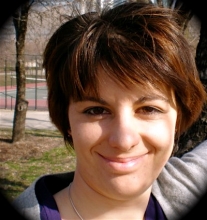 Dr Briony Frost. Fascinated by dead poets and monarchs, I came to Exeter University in 2002 to study for a BA in English, for which I received a first class honours and a Dean’s Commendation.
I began to specialise early on in early modern drama, writing my dissertation on Shakespeare’s intertextual influences on Milton. During this time, I also worked part time for the Students’ Shop and as a copy editor/proof-reader for Impress Books. Increasingly committed to researching the early modern, I continued at Exeter to undertake a part-time MA in Renaissance Studies. This was funded by the AHRC and I achieved a distinction.
My dissertation, “The Isle of Dogs: Playing at Politics and the Politics of Playing in Elizabethan England 1597-1599,” formed a starting point for my PhD thesis. I began my PhD in 2007. My thesis “Becoming a King’s Man: Shakespeare’s Stage and James’ State 1604-1610” tackles the possible Greenwich play candidates, Measure for Measure, Macbeth, King Lear and Antony and Cleopatra, examining the relationship between the stage and state during the turbulent early years of James I’s reign. I address issues of succession and representation under the shadow of the late queen’s famous memory and explore whether the king’s patronage allowed Shakespeare to “o’erleap” the step of censorship to meddle in these affairs of state. This project is fully funded by the AHRC. I have spent two years co-organising the Renaissance Reading Group, a postgraduate and staff discussion group, first with Dr. Vicky Sparey and subsequently with Jem Bloomfield. I am also co-founder and organiser of The Symposium, an informal literature seminar run for first year English BA students.
Briony currently works as an assistant lecturer at the University of Plymouth and teaching associate at the University of Exeter.
Courses delivered by Briony: